
There are no products listed under this brand.
Frequently asked questions
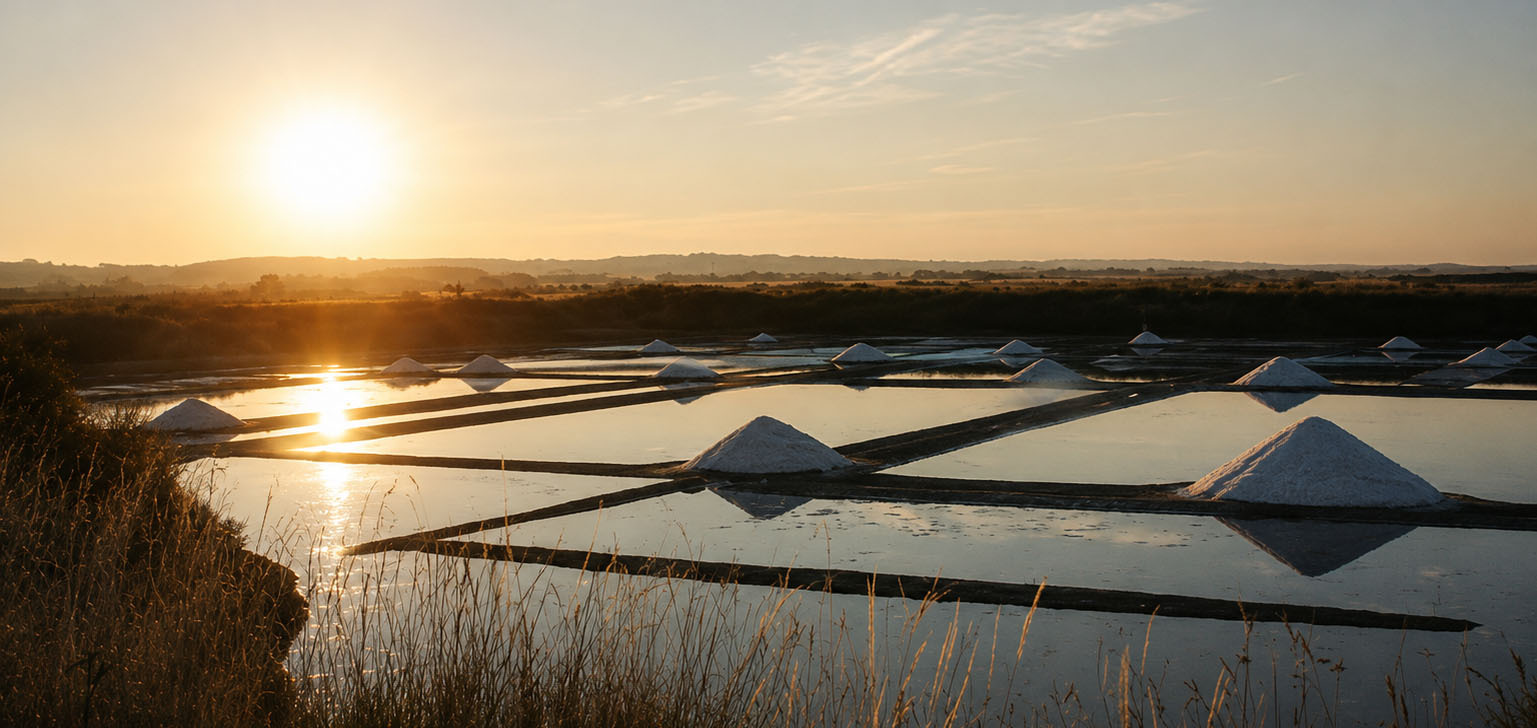
It comes from the marais salants de Guérande on Brittany's Atlantic coast — the same clay salt ponds that have supplied sel de Guérande since the 9th century. Every batch is traceable to the paludier co-op that hand-harvested it.
Sel Gris settles on the clay floor of the salt pond and picks up trace minerals from the clay. The color is completely natural — nothing is added.
Yes. It has a delicate, almost sweet minerality and a crunchy-then-melting texture. That's why it's used as a finishing salt, sprinkled on food just before serving, rather than cooked into a dish.
In a sealed container, away from humidity. Grey salt is naturally moist — that's normal, and a sign it hasn't been dried or refined.
No. Le Guérandais contains only naturally occurring minerals from the Atlantic — no iodine, no anti-caking agents, no additives of any kind.
Sel Gris is commonly cited as containing 70+ trace minerals and elements — magnesium, potassium, calcium, iron, and zinc among them — picked up naturally from the clay pond floor during harvest. Because it's never washed or refined, it keeps this mineral content instead of losing it to processing the way table salt does.
It's become a popular addition to a morning glass of water for exactly this reason: unrefined grey salt carries natural sodium alongside magnesium, potassium, and calcium — the electrolytes your body uses to hold onto water, not just flush it. A small pinch (roughly ⅛ tsp) dissolved in a glass of water is the typical way to use it; some people add a squeeze of lemon. It's not a substitute for medical advice around hydration or electrolyte needs, just a simple, additive-free way to season your water the way Brittany always has.
Often, yes. "Celtic salt" describes the same no-metal, wooden-rake harvesting method used in Guérande for centuries, and much of what's sold in the US under the "Celtic sea salt" name is grey salt imported from this same Brittany coast — sometimes from this same cooperative — just relabeled by importers decades after Guérande's paludiers had already been harvesting it this way. Buying directly under the Le Guérandais name means you know exactly which marshes, and which co-op, it came from.
Shop the Le Guérandais salt collection
- Fleur de Sel — Everyday Kitchen Bag — finish grilled steak, seared fish, sliced tomatoes, salted caramel, dark chocolate.
- Fleur de Sel — Linen Bag — finish grilled steak, seared fish, sliced tomatoes, salted caramel, dark chocolate.
- Fine Grey Sea Salt — everyday cooking, pasta water, vinaigrettes, bread dough.
- Coarse Grey Sea Salt — brines, roasted vegetables, a salt crust for whole fish, seasoning a steak before searing.
- Flavored Trio (Kampot pepper, Espelette chili, natural) — gifting, tasting flights, finishing eggs and avocado toast.